
For university communities, the term is well underway. The buzz and excitement of the first few months might be fading, coursework is likely increasing, and for some there could be a sense of disconnection brewing. This is where peer support can make a real difference.
We know that connection matters, and a sense of belonging and community are protective factors for our mental health, with research showing that feeling connected to others helps us stay well throughout life. When students and staff support each other within university communities, it helps people to feel seen and valued. There is power in peer support!
For some students, finding those connections isn’t always easy and research from the University of Southampton tells us how student loneliness can have a serious impact on mental health and wellbeing.
Loneliness can amplify even the smallest problems, and it’s connected to increases in anxiety, stress and depression. However, when we feel part of something bigger it can help us to regain perspective, by reminding us that we’re not alone in what we face. It helps us to see that challenges aren’t just ours to tackle, and often others have been in the same situation as us. With the right support and time, most of our challenges can be worked through.
When universities build networks of peer supporters across students and staff, they offer the guidance and community that some students really need. We know that many students will turn to friends for help when they’re facing a mental health challenge, and that effective peer support can make a real difference. For many students it can feel easier to open up to someone who “gets it”, someone who understands the pressures of university life and who listens without judgement or agenda. And when that happens, both people benefit. The person being supported feels heard and accepted and the person offering the support can gain confidence and deeper sense of connection. Studies show that when people support one another, both sides feel more connected, confident and valued, and those simple acts of care help to strengthen the whole university community.
Good peer support has its foundations in clear training, support and structure. When peer supporters receive quality training, they feel confident in their role, and the people they support feel safe and in capable hands. Clear boundaries help everyone to work safely, guiding open and respectful conversations without going beyond their role or skills. It’s also vital that peer supporters can recognise when someone needs more help and can confidently signpost them to professional services. The most effective peer support programmes work alongside student wellbeing, support and counselling services to create a connected community of care.
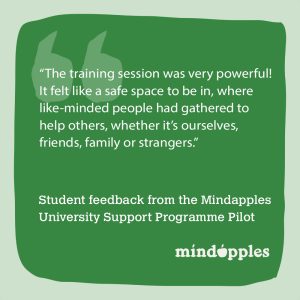
At Mindapples, we put these principles into practice through our Champions Training. Built around a clear set of competencies, it helps people to feel confident when supporting themselves and each other. We work with both student and staff peer mentors, helping them to start open and informed conversations about mental health, to share useful information, recognise healthy boundaries and signpost others to support when they need it. By learning how to listen with empathy, talk comfortably about our minds and care for our own wellbeing, Champions help to build caring university communities where people feel connected and supported.

If your university is looking to embed or develop its peer support programme, we’d love to help you make that happen. You can find out more about our work with universities here, or send one of the Mindapples Team an email to arrange a call universities@mindapples.org