

Many of us were never specifically taught how to look after our minds. We might have learned about our bodies in biology, studied history and maths, and were taught how to cross the road safely. But how our minds work, to recognise what we’re feeling and what helps us to cope when things get hard, was often left to chance. For many of us, we only notice we’re missing something when things start to feel difficult.
But it doesn’t have to be like that.
Why mental health education in school matters
We know that around 1 in 5 children aged 8 to 16 now has a probable mental health condition. Half of all mental health conditions emerge before the age of 14. And around 75% of young people who experience mental health difficulties aren’t getting the help they need. The school years are not just when difficulties tend to emerge. They are also the years when habits begin to form and when children learn how to recognise and respond to what they’re feeling. What they learn about their minds and how able they feel to talk about it can affect how they take care of themselves as they grow up.
There is already a framework in place
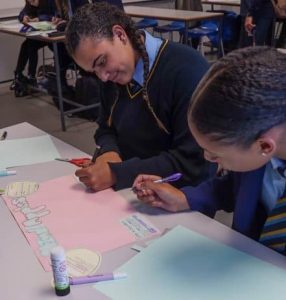
Since 2020, mental health and wellbeing education has been a statutory requirement in schools, set out in the Department for Education’s RSE guidance. The DfE is clear about what young people should be able to do by the time they leave school.
By the end of primary school, pupils should understand that mental health is a normal part of life, recognise a range of emotions, have the vocabulary to describe how they feel, and know where to go for help. By the end of secondary school, they should be able to identify early warning signs of mental health difficulties, understand what helps and harms their wellbeing, and talk about their emotions clearly and with confidence.
The framework is in place but how well are schools being supported to put it into practice?
Awareness is not enough
Findings from the 2025 Education for Wellbeing trial, led by the Anna Freud Centre and UCL highlights a more complex picture. The most promising intervention, Strategies for Safety and Wellbeing, helps young people to recognise that emotions like stress or sadness can be part our everyday lives, to understand the differences between these emotions and mental ill health, and to know where to ask for help if they need it.
This type of early understanding can help young people before difficulties escalate. A key message from the trial is that these approaches work best when they’re delivered consistently and as part of a whole-school approach, which includes building supportive relationships and a sense of belonging across the whole school community.
In practice, this means creating environments where looking after your mind is part of everyday school life, through shared language, open conversations and consistent messages across the whole school community. This is the approach we bring to our work with schools.
The Mindapples Whole-School Approach
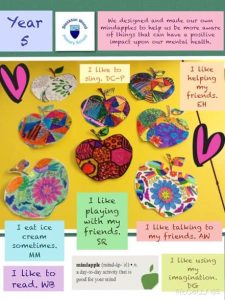
At Mindapples, we work with staff, pupils and the wider school communities including parents, carers and non-teaching staff, to support schools to develop a whole school approach to mental health and wellbeing. Our work is centred around helping people to understand how their minds work, to recognise and talk about a range of emotions and to develop simple, practical and personal ways of looking after their minds. This might include sleep, time with others, restful or creative activities, hobbies and daily habits that support our wellbeing.
We work with schools to build a shared language and understanding so conversations about mental health feel normal and natural – a part of everyday life. Over time this can help to develop and strengthen self-awareness, resilience and confidence, supporting whole school communities to ask for help when they need it.
A final thought
The way we understand and talk about mental health in schools doesn’t just stay within the classroom. It can influence how people respond to challenge, how they relate to one another and how confident they feel asking for help. When we create a shared language, it becomes easier to talk about what’s going on and to notice when something isn’t quite right, both in school and beyond.
If you’d like to find out more about our work in schools, we’d love to hear from you.
Get in touch at schools@mindapples.org